Echo of Consciousness
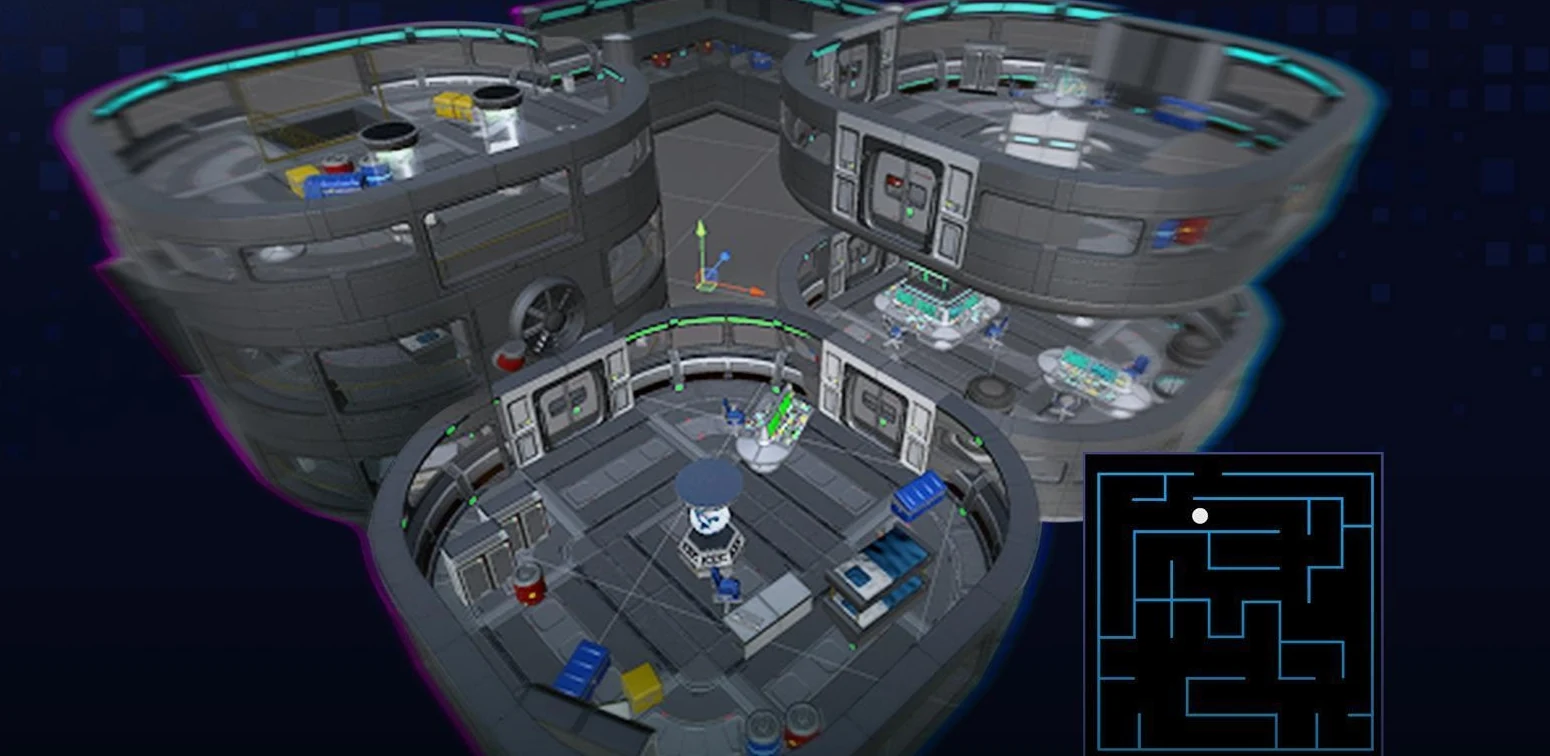
A narrative puzzle game about digital consciousness and human identity, played across an interconnected physical and digital world.
- Year
- February 2025
- Type
- Narrative puzzle game — 3D spatial exploration + 2D interface puzzles
- Team
- Solo project
- Platform / engine
- PC, Unity (C#)
- My role
- Game design and programming — level design, gameplay systems, interface
Overview
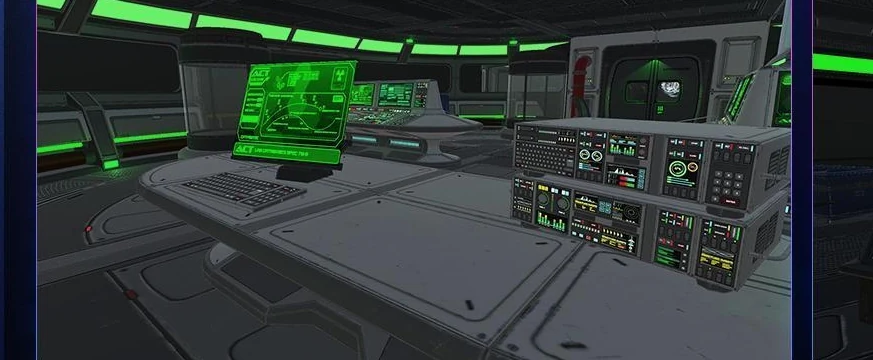
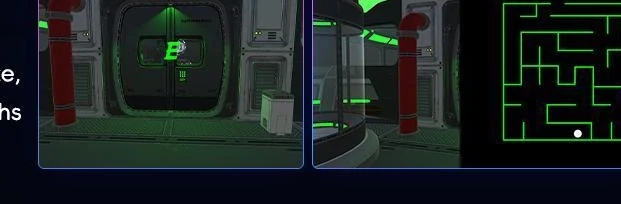
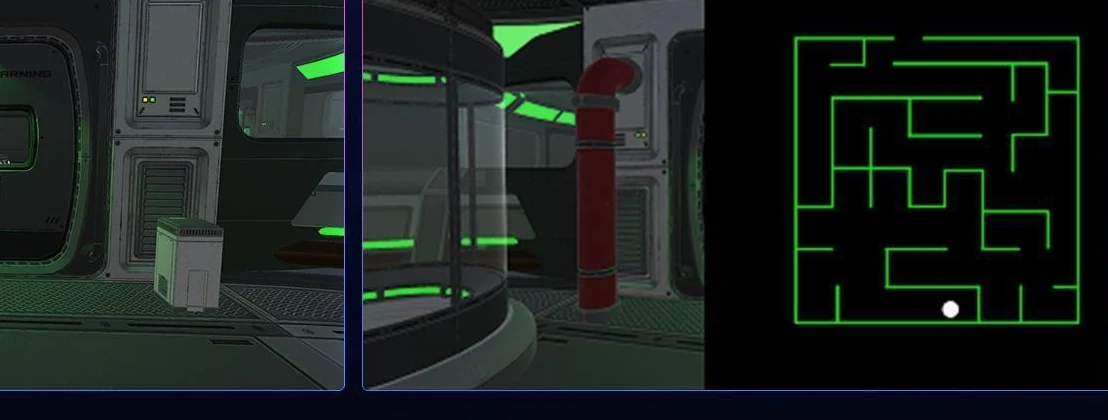
Echo of Consciousness is a narrative puzzle game built in Unity. The player is a test subject who survives a failed human experiment and wakes inside an abandoned laboratory, able to upload their consciousness into electronic systems. Progress is blocked by locked door nodes: to open one, the player leaves the body behind and enters a 2D maze that represents the lock's internal logic. Physical space and interface are two layers of the same level, and play alternates between them.
Concept and research
The project began with a teleportation thought experiment: if a person is copied, destroyed and rebuilt elsewhere, is the new individual the same consciousness? SOMA and The Talos Principle were the reference points, but the design problem turned out to be mechanical rather than narrative. Most games treat a computer interface as a menu. Treating the electronic system as navigable space solved it: the digital layer could have clean rules and instant feedback, while the physical layer kept the body, the gravity and the irreversible mistakes.
Design
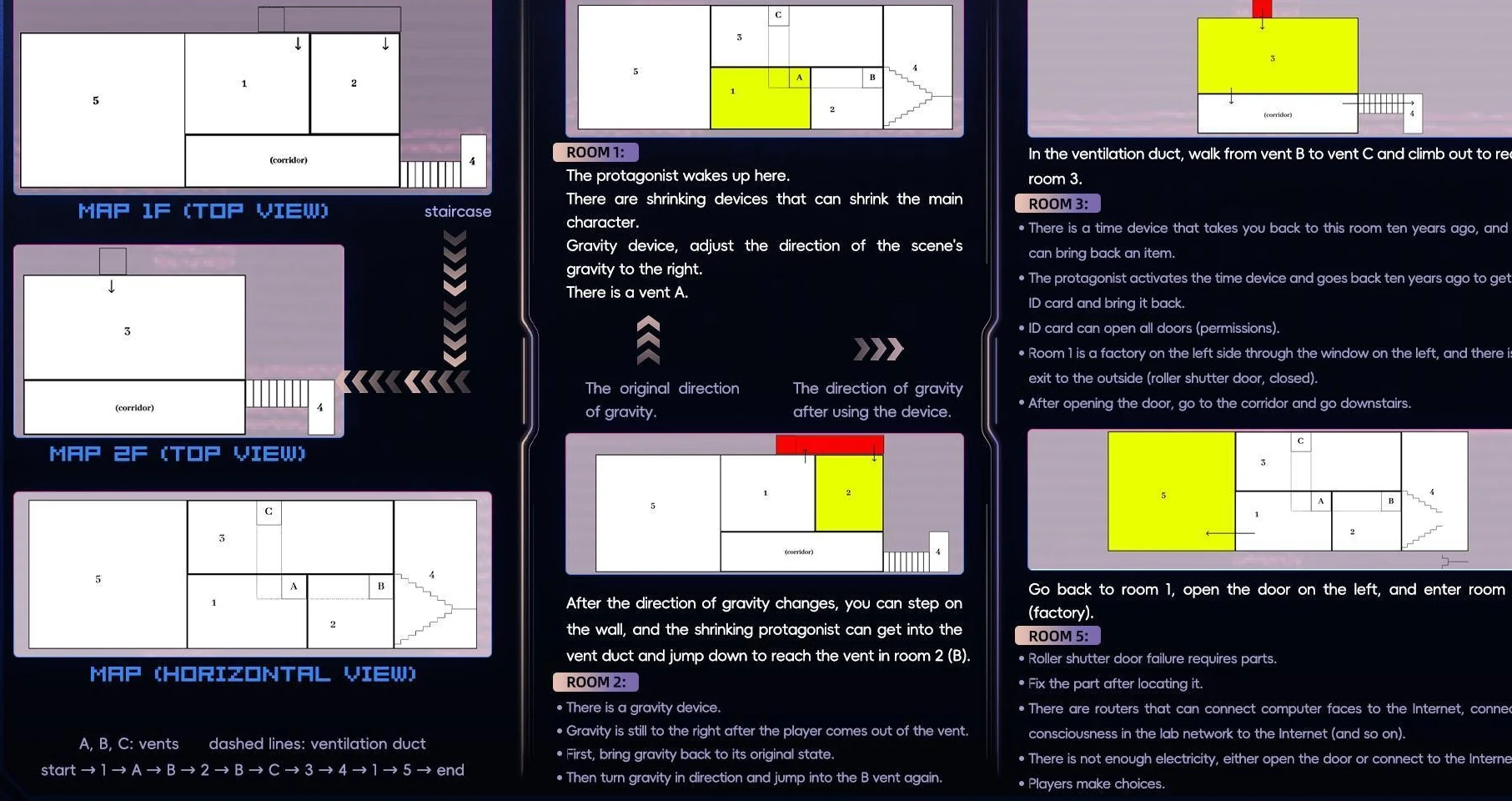
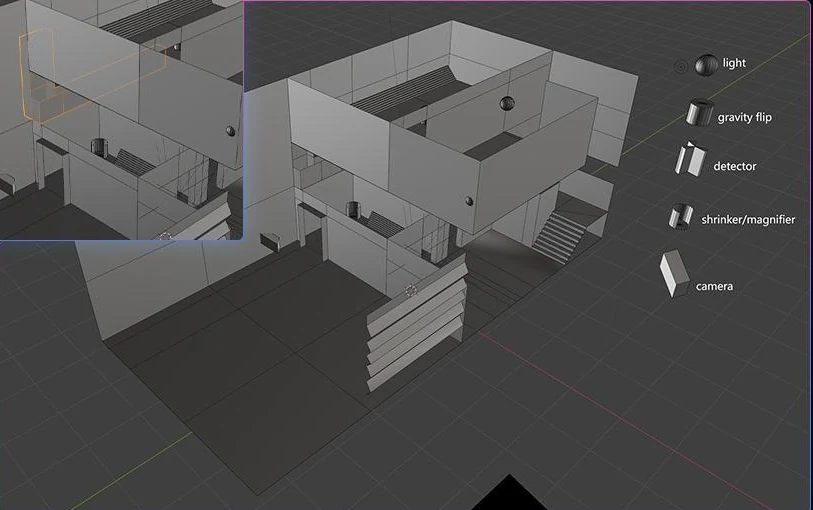
The loop repeats: explore the physical space, meet an obstruction, enter the digital system, unlock progression, return to the body. The physical layer is a two-storey laboratory arranged as an interconnected maze, with ventilation ducts, a gravity-flip device and a shrinking device; the digital layer is a top-down maze on a CRT. The digital world is deliberately safer, faster and more legible than the physical one, and over the length of the game the player should notice that leaving the body is always the rational choice. That drift is the argument the game makes about identity.
The transition is the mechanic, not a cutscene: the same locked door is a wall in the physical world and a maze in the digital one, and by the third lock the player should read a new maze at a glance.
Development
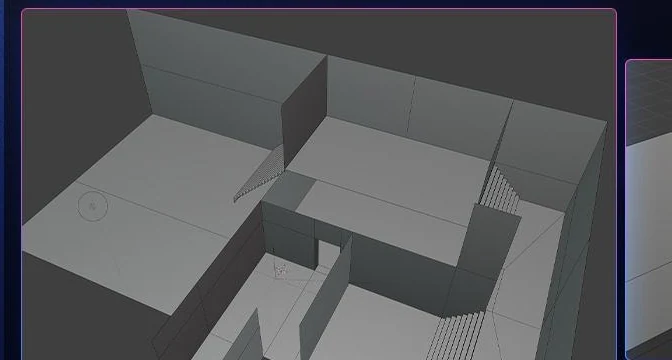
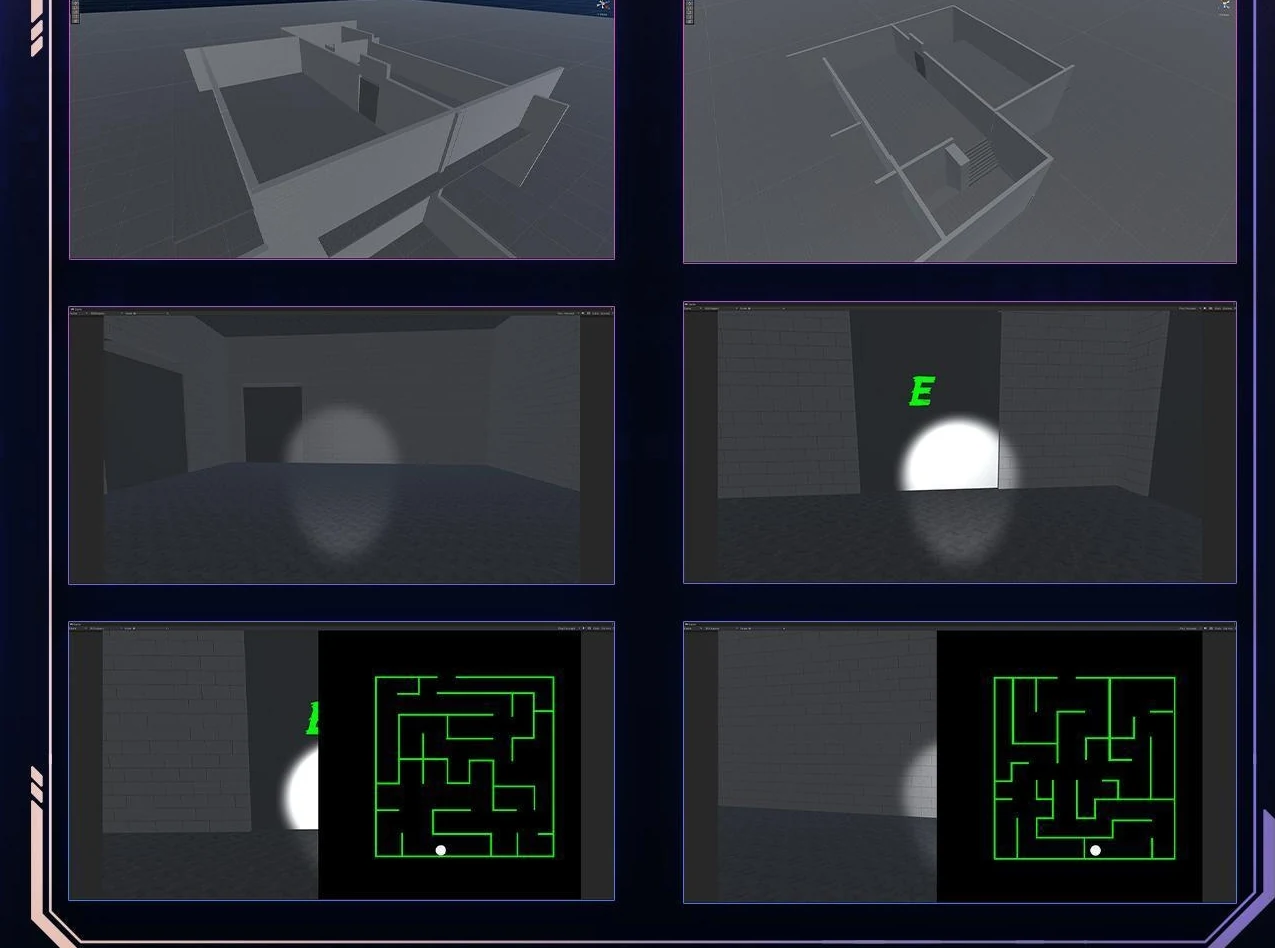
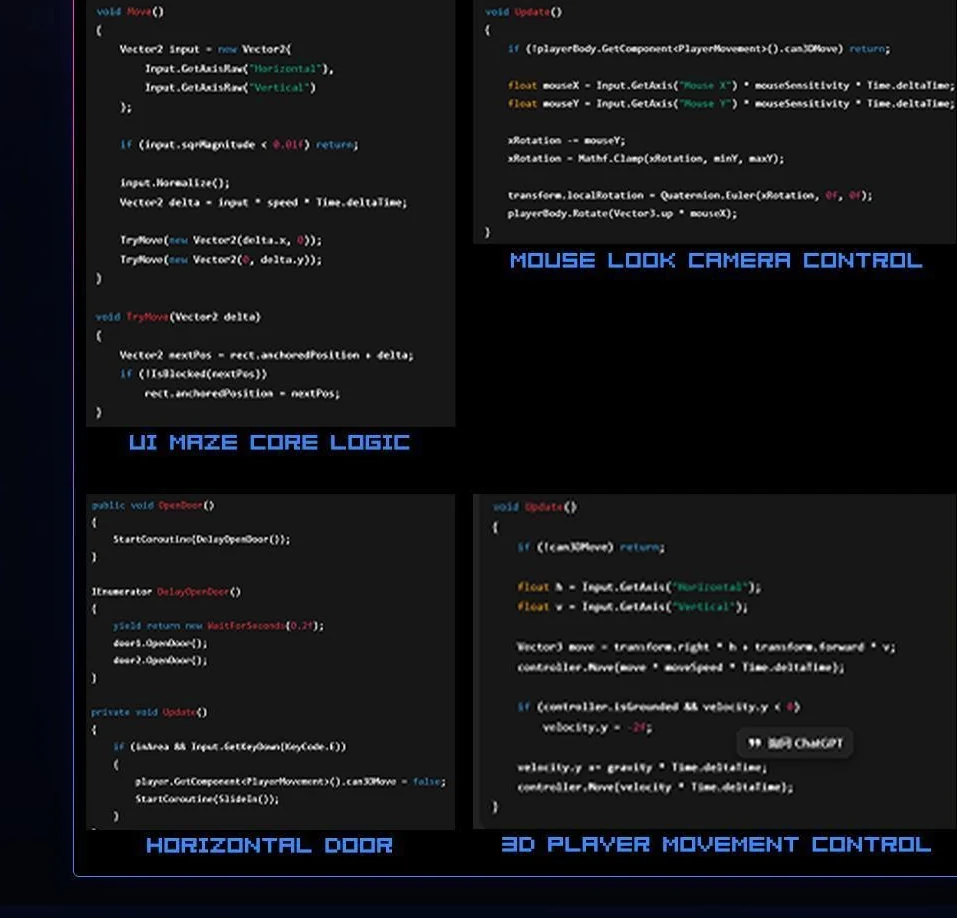
The first level draft was a top-down floor plan. It could not express how the two storeys relate, and the 3D whitebox built from it produced constant spatial conflicts, so the plan was dropped and the layout was redesigned directly in 3D. I wrote the camera, the player controller, the door sequence and the maze UI in C# and tested each in play; some boilerplate was drafted with an AI assistant and then rewritten to fit the project.
Outcome and reflection
The build is playable end to end and published on itch.io. The digital sequences read clearly, but the physical layer still carries too much walking between puzzles. A next pass would shorten the corridors and move one puzzle into the ventilation route so that both layers are in play at once.
Project images
Download project PDF ↓