AI Factory
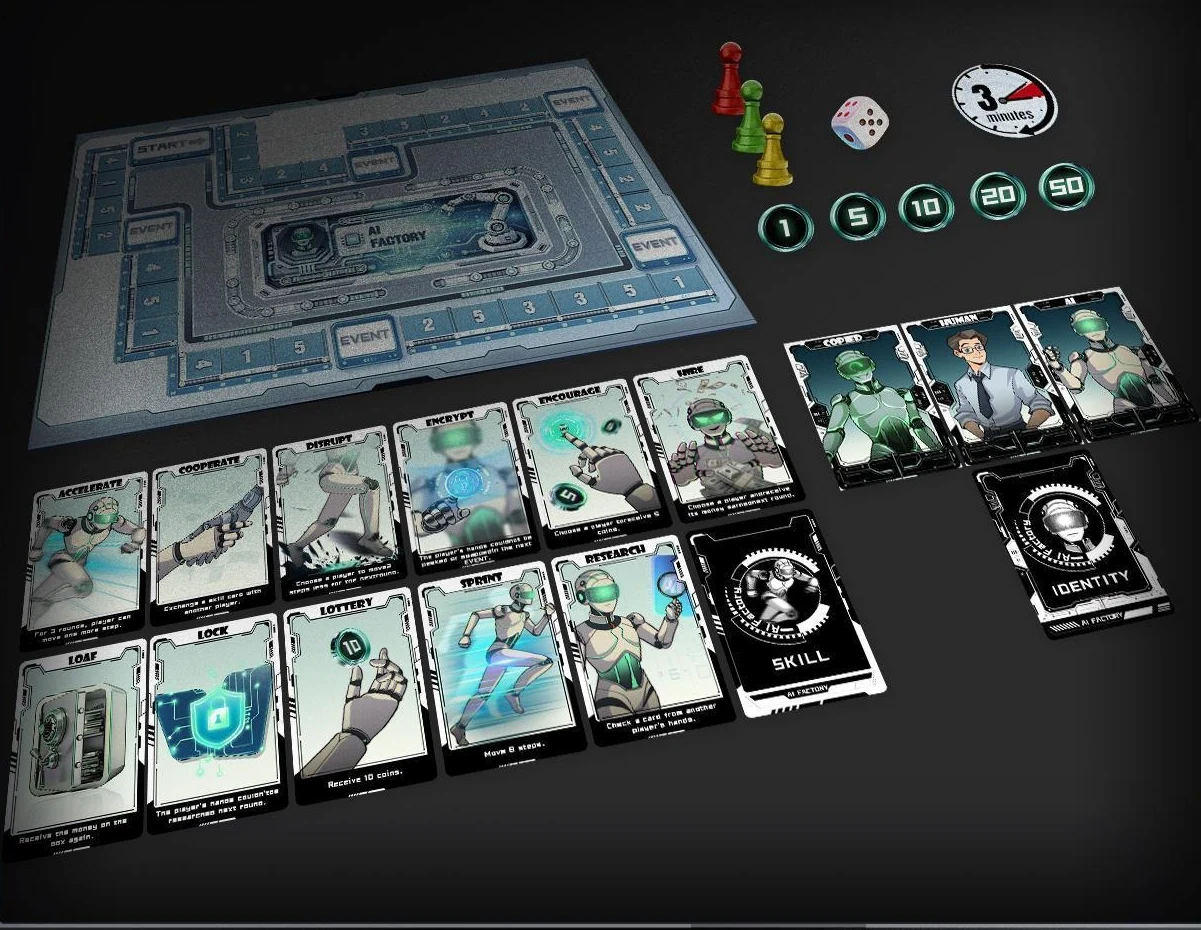
A sci-fi social-deduction board game in which the human players have to work out which of them is a hidden AI.
- Year
- July 2024
- Type
- Analogue board game — social deduction, roll-and-move, light economy
- Players
- 6
- Team
- Solo project
- My role
- Game Designer — systems, cards, board layout, rulebook
- Tools
- Paper prototypes, Tabletop Simulator, print-on-demand set
Overview
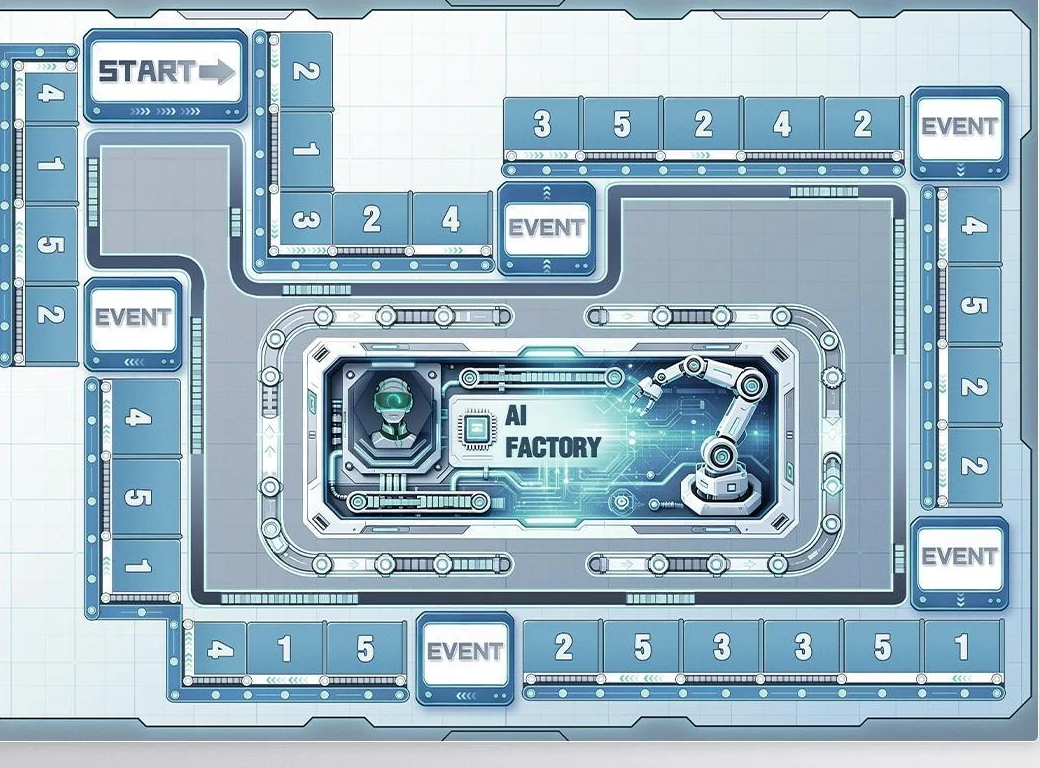
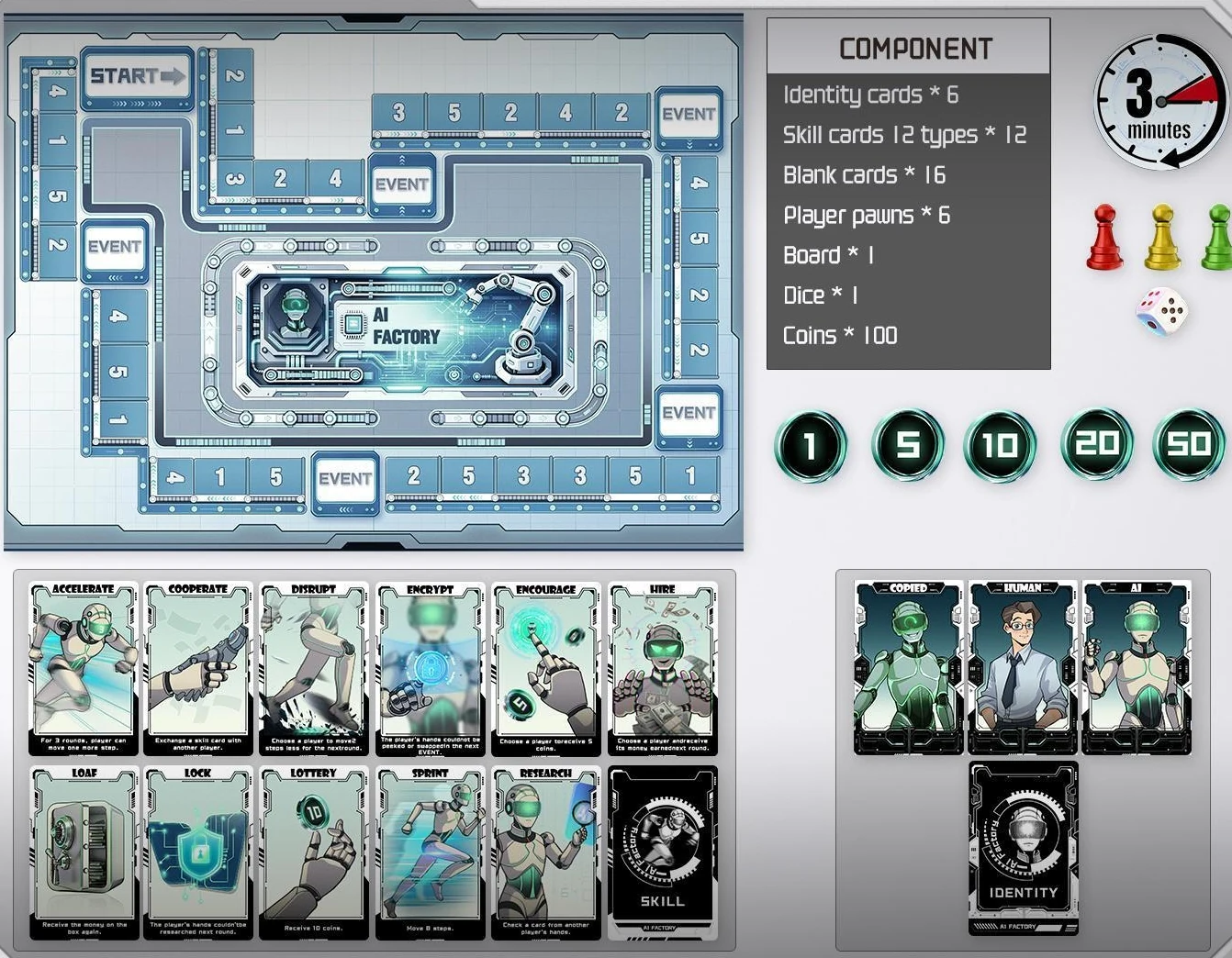
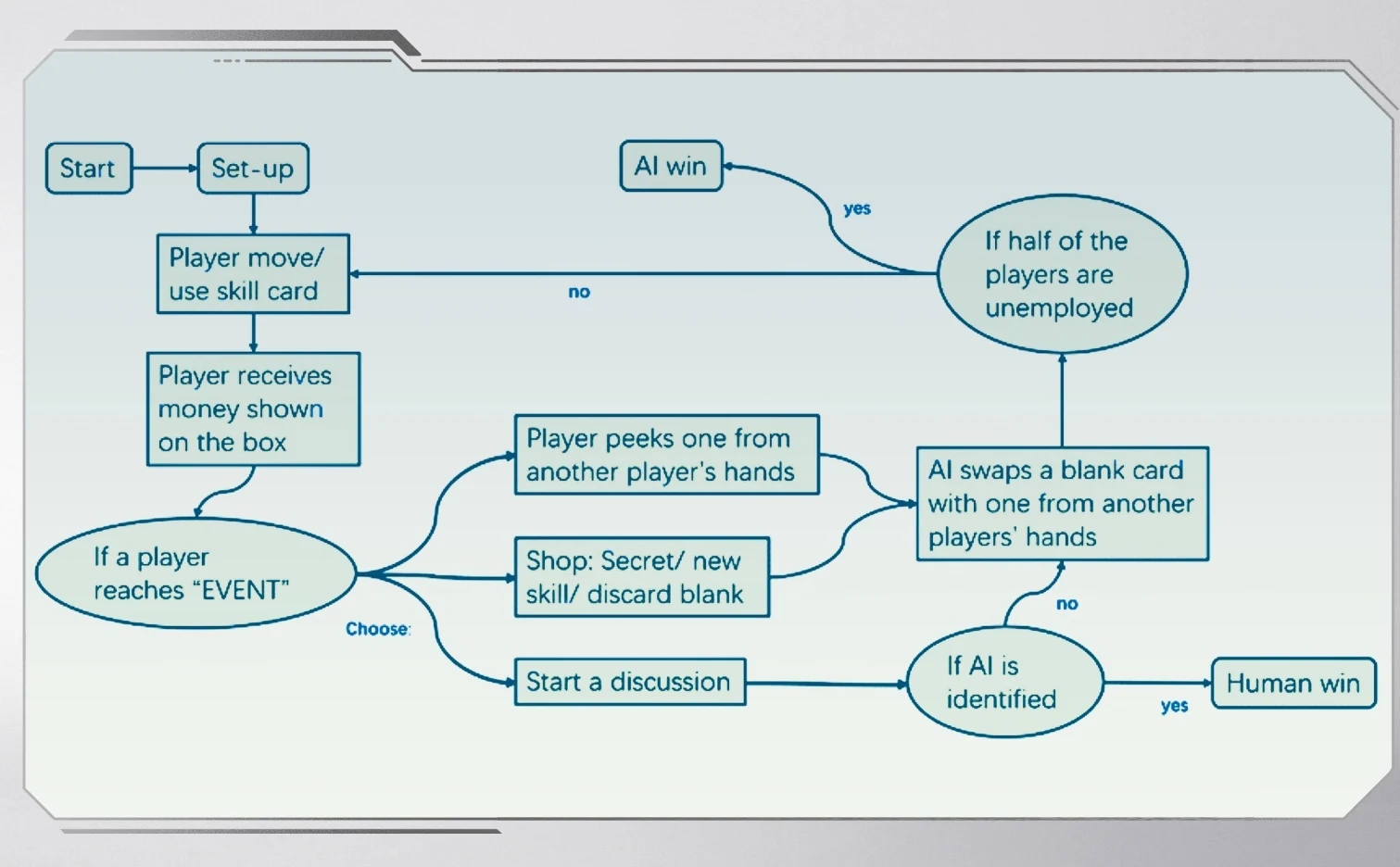
AI Factory is a social-deduction game set on the floor of an automated factory. Players roll a die, collect coins on numbered spaces and stop on EVENT spaces to buy information or open a discussion. One player is secretly the AI: at every EVENT it swaps a human's skill card for a blank “copied” card, and a hand that is entirely blank makes that player “unemployed” and out. The AI wins when half the table is unemployed; the humans win by agreeing on a suspect and being right, inside a three-minute discussion clock.
Concept and research
The starting point was job replacement: what happens to a person when a system can do their work, and can that person prove it? Monopoly supplied the production loop and One Night Ultimate Werewolf the hidden-role tension, but neither answered the real question — how to make an AI's “learning” a board action rather than card text.
The answer was the blank card: the AI never gains an ability, it takes one away, and that absence is the only evidence the table has. Elimination is unemployment rather than death, which keeps the metaphor literal and the game free of violence.
Trust, deception and human–AI interaction sit on top of that: information only moves between players, the AI's tell is the absence in someone else's hand, and the AI is still played by a person who has to behave like a system.
Design and iteration
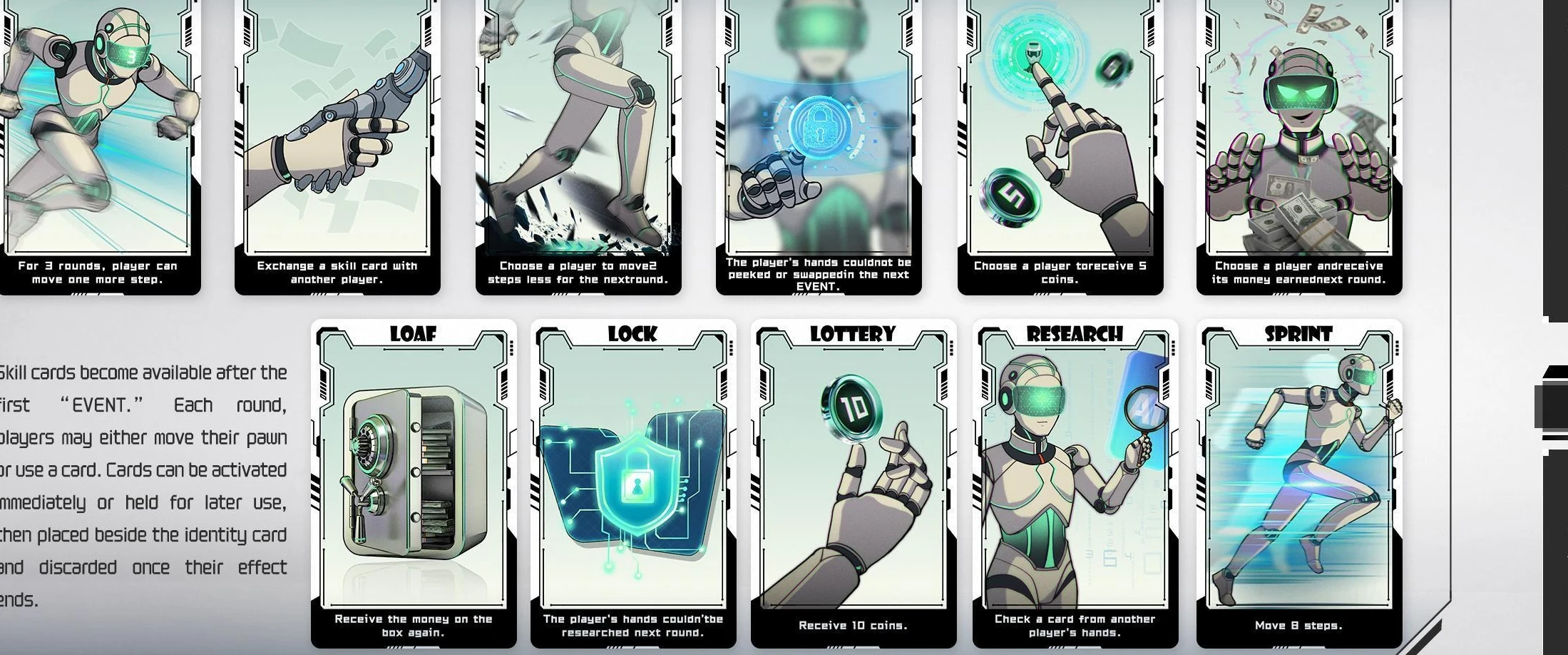
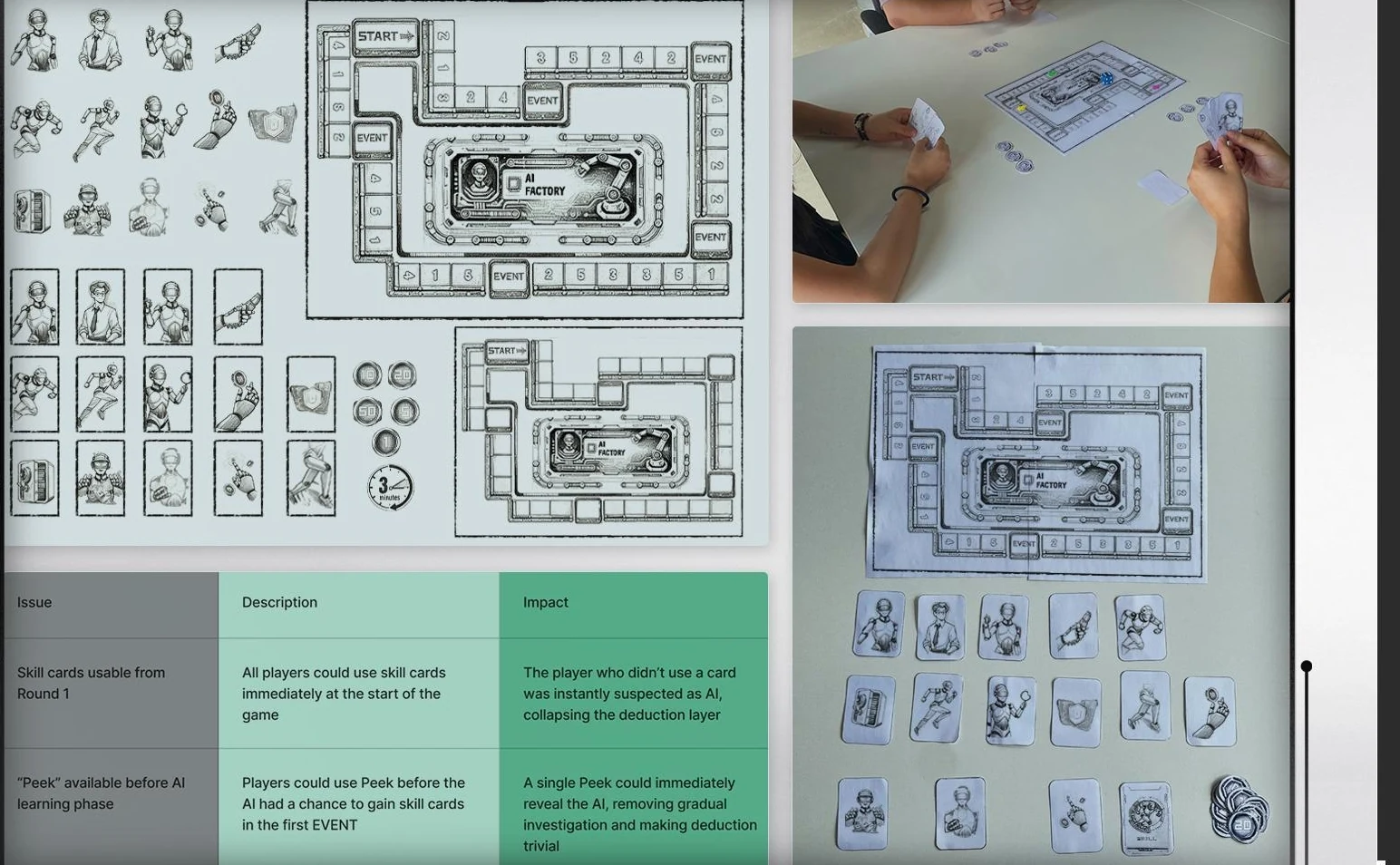
Skills are bought, not dealt. From the first EVENT onward, players spend coins on Secret (look at a hand), a new skill card, or Training (discard a blank). Cards can be played the turn they are bought or held, and a hand limit of three keeps the economy tight. The board carries only money and EVENT spaces, so every route decision is a bet on information.
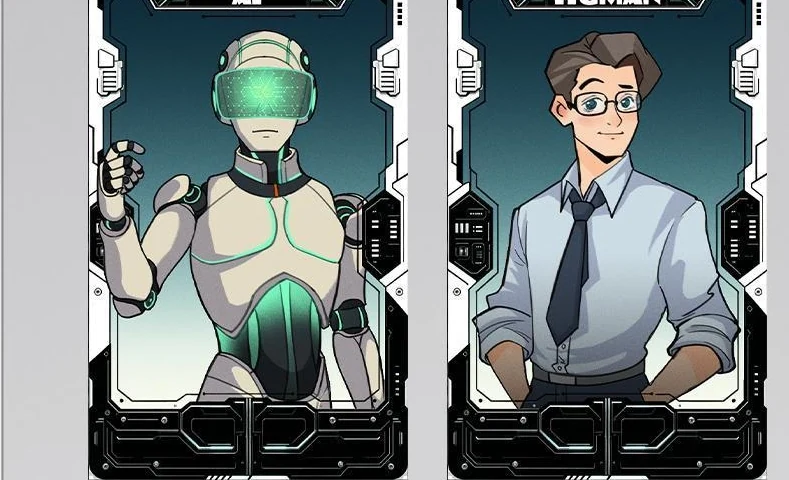
Humans and the AI are asymmetric by design: humans hold skills and buy information, the AI holds blanks and takes skills away. The vote is the only moment the two sides meet on equal terms, which is why the discussion clock does more work than any single card.
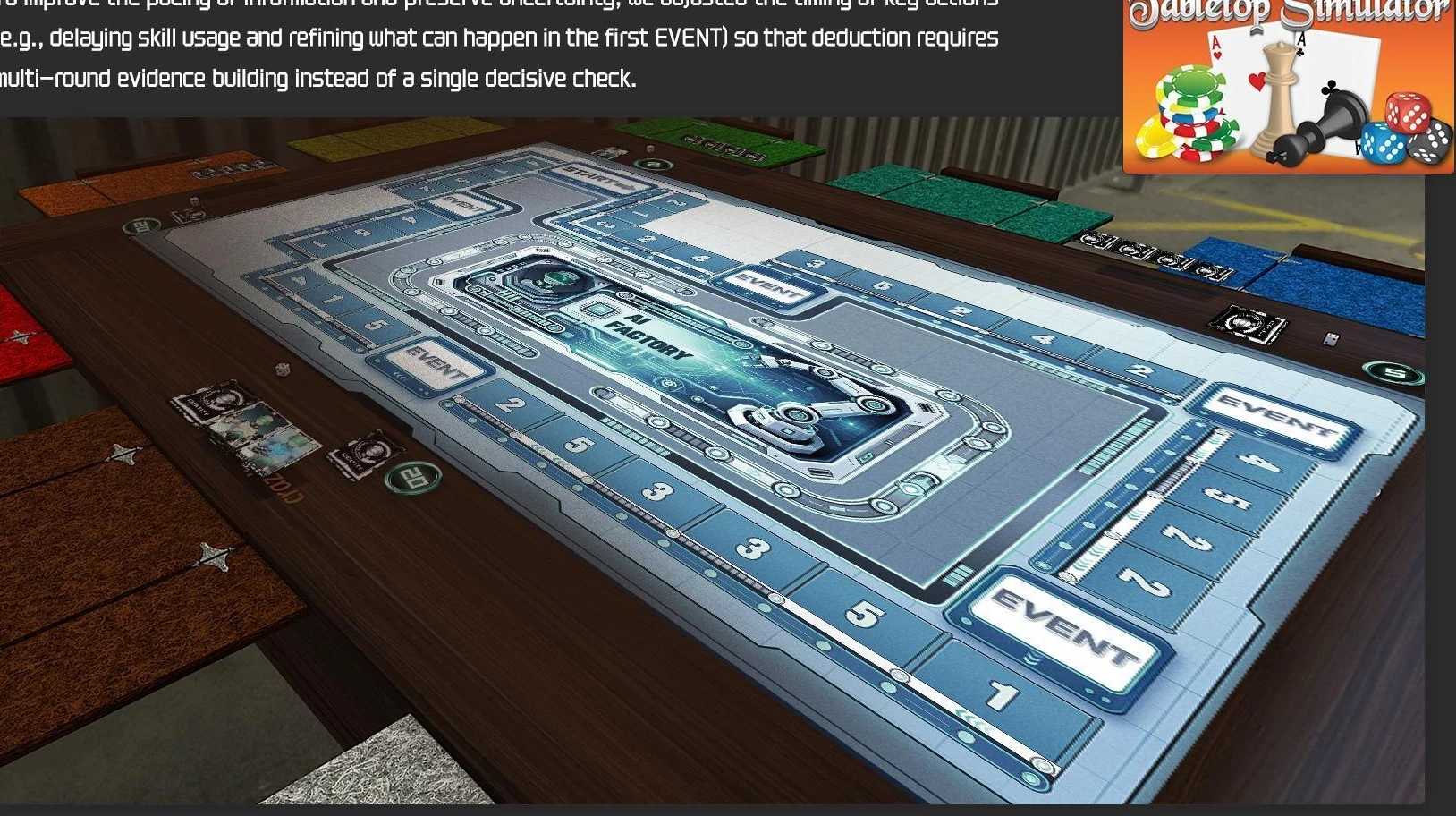
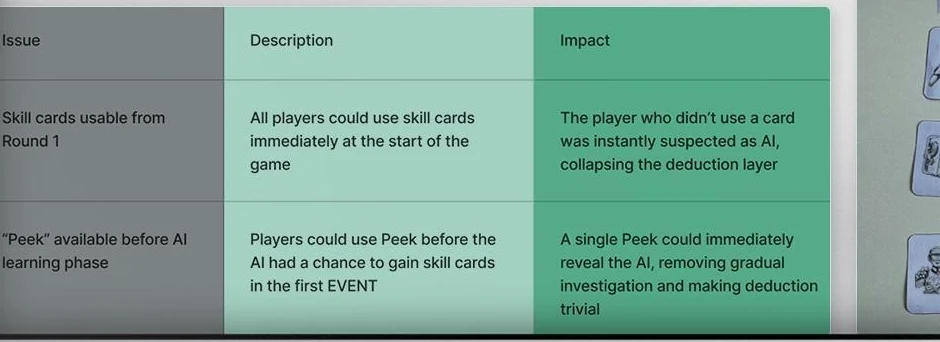
Two playtests broke the deduction layer. Skill cards from round one made the AI obvious before it had taken anything, and Peek before the AI's first learning action turned a multi-round investigation into a single check. Both moved behind the first EVENT, so evidence now accumulates. The prototype went from paper to Tabletop Simulator to a printed set.
Outcome and reflection
The printed copy plays without a moderator, and the clock stops the endgame from stalling. The weakness is thematic as much as mechanical: at a full table the AI has the least to say during discussion. A two-AI variant is the next test.
Project images
Download project PDF ↓