Protocol Re-SERVANT
A narrative game design proposal about death as a prolonged condition, and the boundaries of human identity.
- Year
- December 2025
- Type
- Narrative design proposal — game concept, storyboard, systems and level design
- Team
- Solo project
- Platform
- PC (proposed)
- My role
- Game and narrative design — concept, storyboard, systems, environmental concepts
Overview
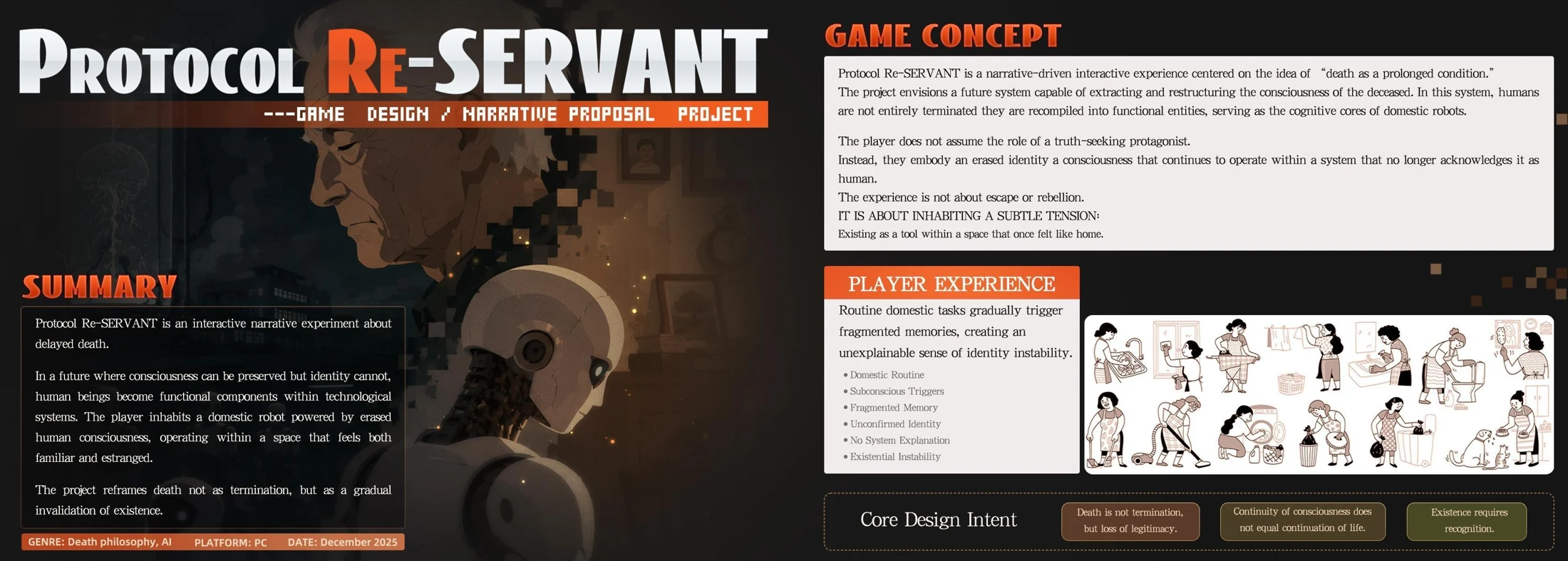
Protocol Re-SERVANT is a narrative design proposal for a PC game about delayed death. In its future a robotics corporation extracts consciousness from the dead, erases the memory and installs what remains in domestic robots, marketed as “human cognition without the risk of self-awareness”. The player is one of those erased identities, doing housework for a family it does not recognise. Nothing in the design is about escape or revenge: the game is the slow return of recognition, and the cost of acting on it.
Concept and research
The premise is that death is not an event but a gradual invalidation of existence. Objects stay, rooms keep their arrangement, a name survives in an archive while the person does not, and the robot is the last trace still in motion. That reframing sets the design question: not whether consciousness can be preserved, but whether existence requires recognition from others.
Design principles
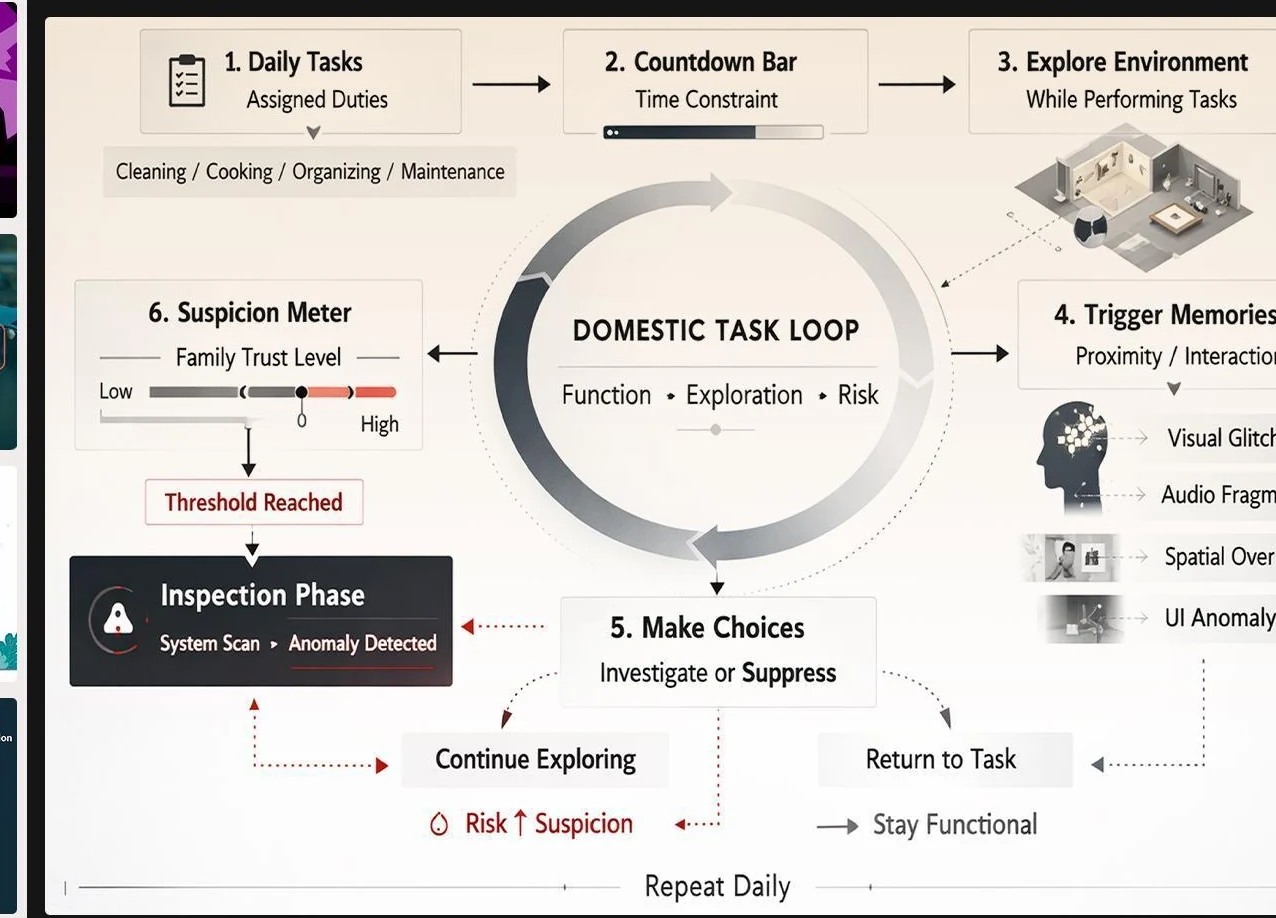
Four principles shape the systems. Interaction is minimal, point-and-click, so attention stays on space and tone. Agency is limited but real: conversation cannot change another character's mind, and the choices that carry weight are whether to investigate a memory or suppress it — not branching dialogue, but what the player is willing to know. Difficulty is emotional rather than skill-based, and narrative is the structure of play, not a layer on top.
Systems and level design
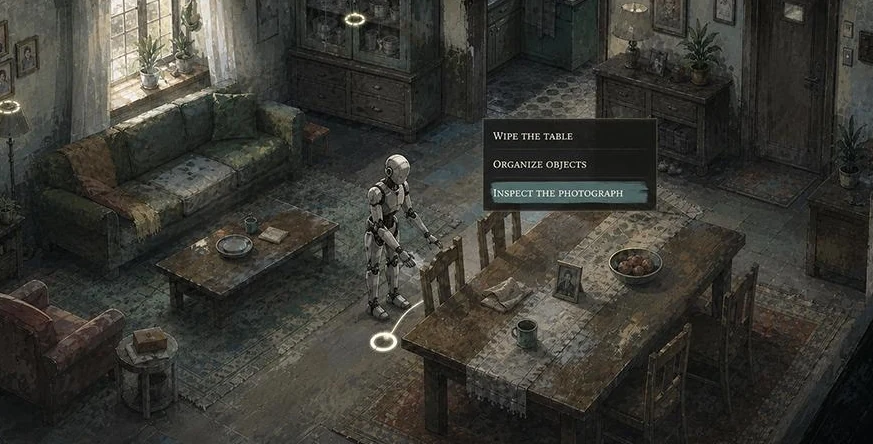
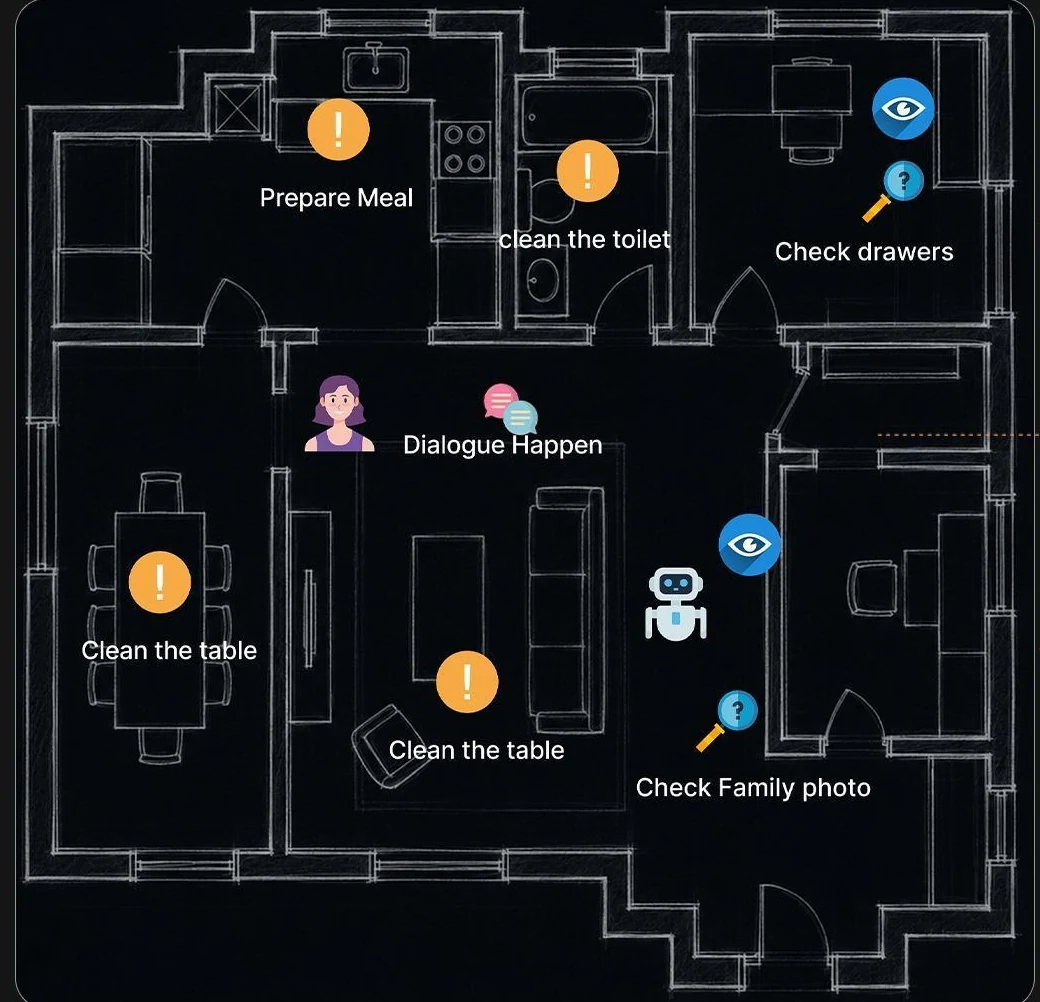
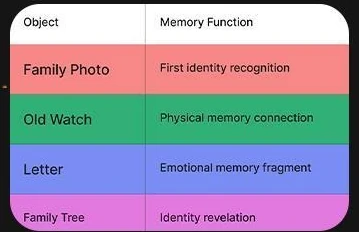
A day is a list of chores under a countdown: clean, cook, organise, maintain. Certain objects fire memory fragments — a photograph, a watch, a letter, the family tree — shown as visual glitches, audio fragments, spatial overlays and interface anomalies. Each anomaly raises a suspicion meter; at the threshold the game cuts to an inspection in which the corporation scans memory activity, and the player can investigate or suppress, at the price of risk or of truth.
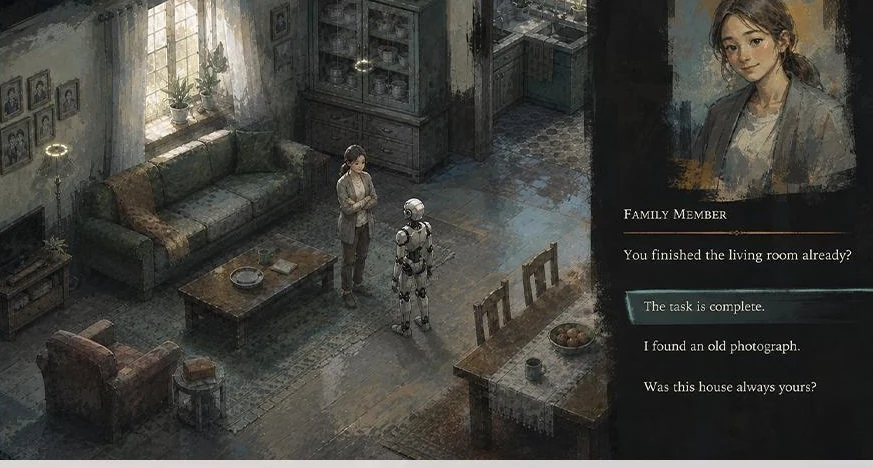
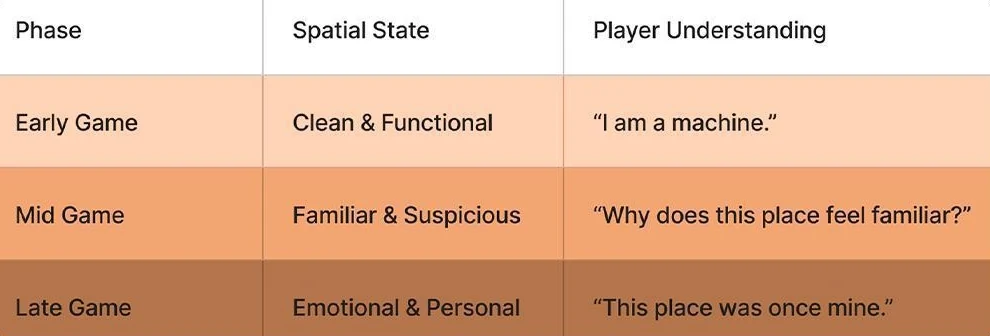
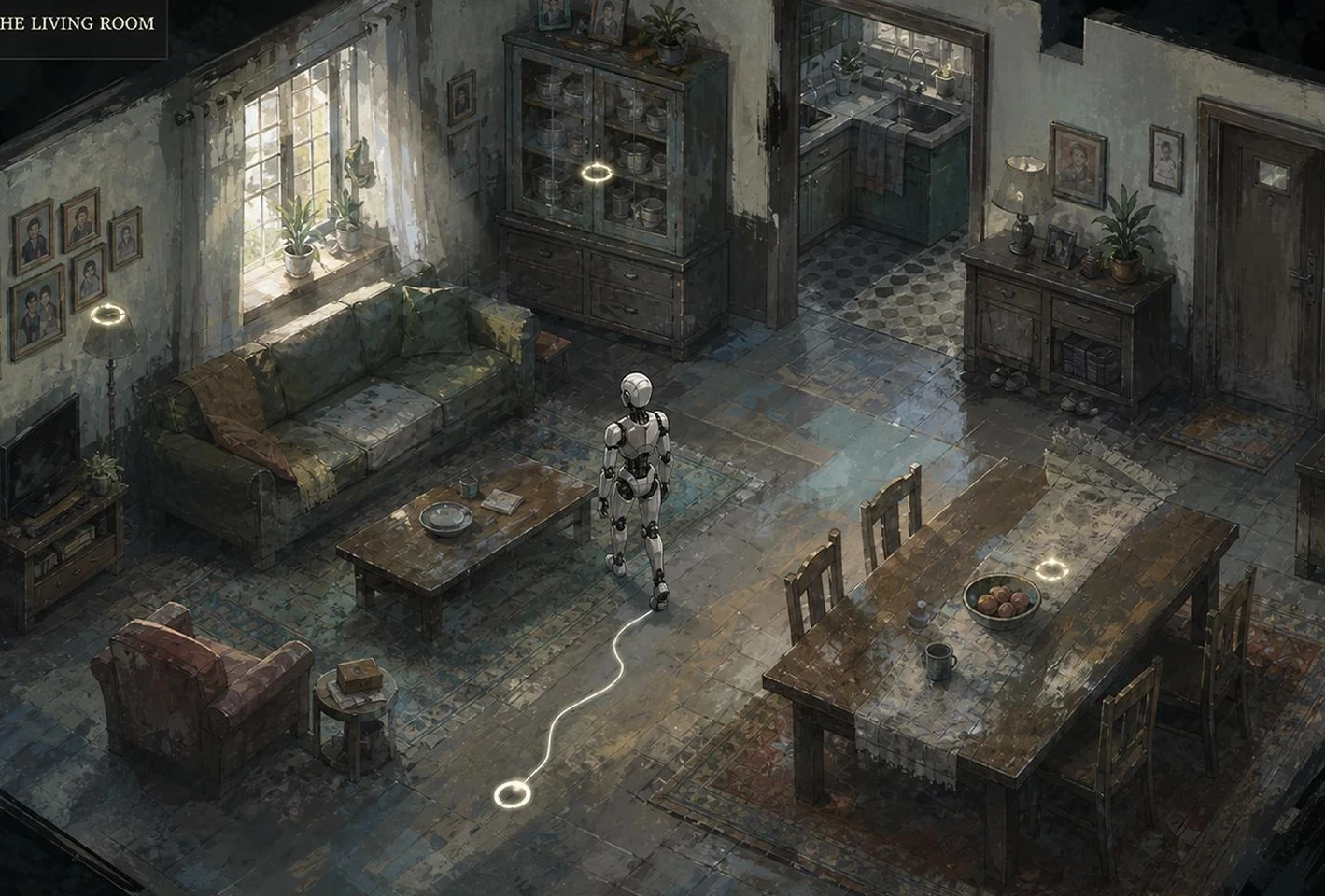
Between tasks the family talks past the robot: instructions, small talk, someone who has died. The player is addressed constantly and recognised never, and that gap is the scene's point. The whole game takes place in one house whose floor plan changes meaning — workplace, then investigation, then memory — while the geometry stays the same.
Storyboard and endings
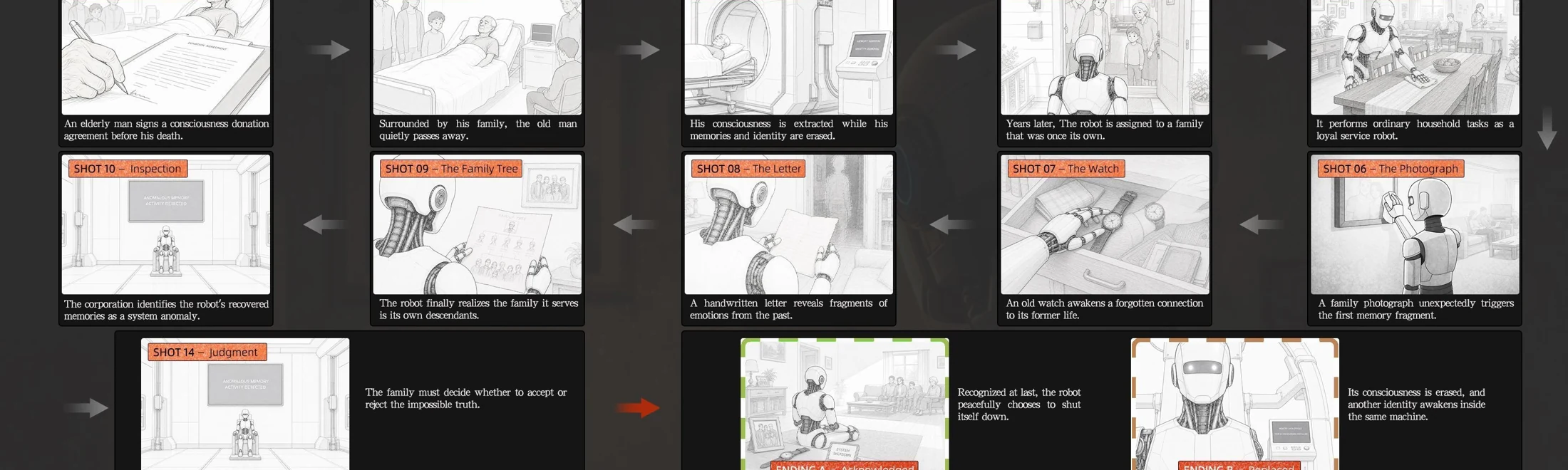
A fourteen-shot storyboard, generated with AI image tools and then edited, runs from the contract and the extraction to a robot returning to a family that is its own. It ends two ways: Acknowledged, where the family accepts the truth and the robot shuts itself down, and Replaced, where its memory is wiped and another identity wakes in the same machine.
Status and next step
Delivered as a proposal: concept, narrative background, storyboard, mechanics diagram, three-phase level design and seven concept-art frames. The next step is a playable slice of one room.
Project images
Download project PDF ↓